
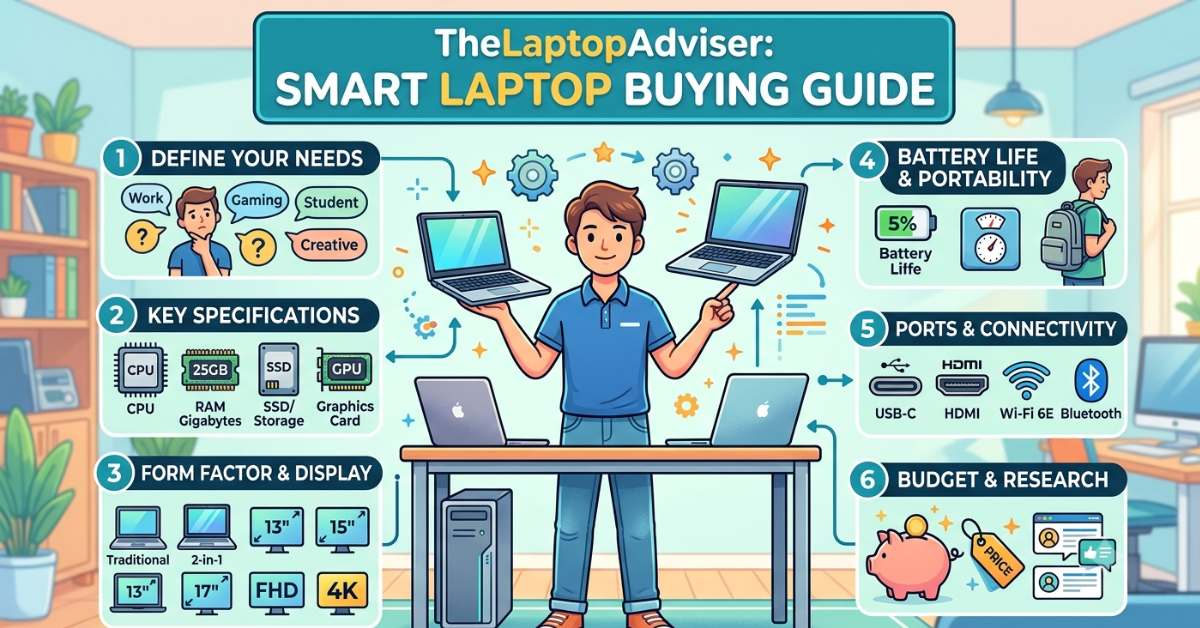
Buying a laptop should be exciting, but with hundreds of models, endless specifications, and constantly changing technology, it often becomes confusing. Should you prioritize processing power, battery life, portability, or price? The answer depends entirely on how you plan to use your laptop.
That’s where buyer guides thelaptopadviser become valuable. Instead of relying on marketing claims or overwhelming technical specifications, these guides simplify the buying process by breaking down what truly matters for different users and budgets.
In this guide, you’ll learn how buyer guides work, what they typically include, how to evaluate laptop features confidently, and how to avoid common purchasing mistakes. Whether you’re a student, professional, gamer, creator, or casual user, this article will help you make a smarter buying decision.
What Is Buyer Guides TheLaptopAdviser?
Buyer guides thelaptopadviser refers to a collection of educational resources designed to help consumers compare, evaluate, and select laptops based on their individual needs rather than simply choosing the newest or most expensive model.
Rather than focusing only on technical specifications, these guides typically explain:
- Which laptop fits different use cases
- Performance expectations
- Hardware recommendations
- Budget considerations
- Long-term value
- Pros and cons of different models
- Buying tips for beginners
The goal is to make technology easier to understand for everyone—from first-time buyers to experienced users upgrading their devices.
Why Laptop Buying Has Become More Complicated
A decade ago, laptop shopping was relatively straightforward. Today, manufacturers release dozens of models every year with similar names but very different hardware.
Some common challenges buyers face include:
- Confusing processor names
- Different graphics options
- Multiple display technologies
- Various storage types
- Battery life claims that differ from real-world usage
- Rapidly changing hardware generations
Without proper guidance, many people either overspend or purchase a laptop that doesn’t meet their needs.
Who Can Benefit from Laptop Buying Guides?
Laptop buying resources are useful for nearly every type of buyer.
Students
Students often need:
- Lightweight laptops
- Long battery life
- Affordable pricing
- Reliable performance for assignments and online classes
A buying guide helps balance performance with budget.
Professionals
Office workers typically prioritize:
- Productivity
- Fast multitasking
- Comfortable keyboards
- Video conferencing performance
- Security features
Business users also benefit from recommendations focused on durability and reliability.
Gamers
Gaming laptops require careful evaluation because graphics performance varies significantly.
Guides often explain:
- GPU differences
- Refresh rates
- Cooling systems
- Upgrade potential
- Display quality
Content Creators
Video editors, photographers, and designers usually require:
- Powerful CPUs
- Dedicated graphics cards
- Color-accurate displays
- High RAM capacity
- Fast SSD storage
Buying guides help identify machines that can handle demanding creative workloads.
Everyday Users
For browsing, streaming, emails, and light productivity, buyers often don’t need premium hardware.
A quality guide helps avoid paying for unnecessary features.
Essential Laptop Features Explained
Understanding laptop specifications makes comparing models much easier.
Processor (CPU)
The processor is the brain of your laptop.
Common processor families include:
- Intel Core series
- AMD Ryzen series
- Apple Silicon processors
A stronger processor improves:
- Multitasking
- Application speed
- Video editing
- Programming
- Overall responsiveness
For basic users, mid-range processors are often sufficient.
Memory (RAM)
RAM affects how smoothly your laptop handles multiple applications.
General recommendations:
- 8 GB for everyday tasks
- 16 GB for most professionals
- 32 GB or more for advanced editing, engineering, and heavy multitasking
More RAM doesn’t necessarily make every task faster, but it improves overall responsiveness.
Storage
Most modern laptops now use SSD storage.
Advantages include:
- Faster startup
- Quicker file transfers
- Better application loading
- Improved reliability
- Lower power consumption
Storage capacity recommendations:
- 256 GB for basic users
- 512 GB for most buyers
- 1 TB or more for creators and gamers
Graphics
Not every laptop needs a dedicated graphics card.
Integrated graphics are suitable for:
- Office work
- Streaming
- Browsing
- Online learning
Dedicated GPUs are better for:
- Gaming
- 3D rendering
- CAD software
- Video editing
- Animation
Display Quality
Display quality affects everyday usability.
Important factors include:
- Resolution
- Brightness
- Color accuracy
- Refresh rate
- Screen size
- Panel technology
Higher resolution creates sharper images, while higher refresh rates improve smoothness during gaming and scrolling.
Battery Life
Real-world battery life depends on:
- Screen brightness
- Processor efficiency
- Background applications
- Display resolution
Many buyer guides recommend checking independent battery testing rather than relying solely on manufacturer estimates.
Build Quality
Durability matters if you travel frequently.
Premium materials often include:
- Aluminum
- Magnesium alloy
- Carbon fiber
A sturdy chassis generally lasts longer than inexpensive plastic alternatives.
How Buyer Guides Compare Different Laptops
A comprehensive laptop buying guide typically evaluates devices using several criteria.
Performance
Testing includes:
- Everyday productivity
- Multitasking
- Creative software
- Gaming performance
Design
Reviewers examine:
- Weight
- Thickness
- Build materials
- Keyboard comfort
- Touchpad quality
Display
Evaluation covers:
- Brightness
- Contrast
- Color accuracy
- Viewing angles
Battery
Instead of laboratory claims, many reviewers focus on real-world usage.
Value
Price is always compared with:
- Features
- Performance
- Longevity
- Warranty
- Upgrade potential
Common Buying Mistakes to Avoid
Many shoppers make similar mistakes.
Buying Only Based on Processor
A fast processor cannot compensate for:
- Low RAM
- Slow storage
- Poor cooling
- Low-quality display
Always evaluate the complete package.
Ignoring Upgrade Options
Some laptops allow upgrades to RAM or storage, while others do not.
Checking upgrade possibilities can extend your laptop’s lifespan.
Paying for Features You’ll Never Use
Not everyone needs:
- 4K displays
- Dedicated GPUs
- Ultra-high refresh rates
- Premium creator hardware
Choosing based on your actual workload often saves money.
Overlooking Port Selection
Consider whether your laptop includes:
- USB-C
- USB-A
- HDMI
- SD card reader
- Headphone jack
Otherwise, additional adapters may become necessary.
How to Choose the Right Laptop for Your Budget
A structured buying approach often produces the best results.
Budget Buyers
Focus on:
- Reliable processors
- SSD storage
- At least 8 GB RAM
- Good battery life
Mid-Range Buyers
Look for:
- Better displays
- Faster processors
- Improved build quality
- 16 GB RAM
- Larger SSDs
Premium Buyers
Expect:
- Excellent displays
- Premium construction
- Powerful processors
- Longer support
- Superior battery optimization
Practical Tips Before Buying
Before making a purchase, consider these recommendations:
- Define your primary use.
- Set a realistic budget.
- Compare multiple models.
- Read recent reviews.
- Check warranty coverage.
- Consider future upgrade needs.
- Don’t ignore keyboard and display quality.
- Buy only the performance you actually need.
Why Buyers Trust Comprehensive Laptop Guides
Good buying guides reduce uncertainty.
They combine:
- Technical knowledge
- Performance testing
- Practical recommendations
- Real-world usage scenarios
- Budget comparisons
Instead of overwhelming buyers with specifications, they explain how those specifications affect daily use.
This practical approach helps consumers make informed decisions with greater confidence.
Key Takeaways
- Buyer guides thelaptopadviser simplify laptop shopping for every type of user.
- Your intended use should determine your purchasing decision.
- Processor, RAM, storage, display, and battery life should all be evaluated together.
- Budget planning prevents overspending.
- Reading comprehensive buying guides helps avoid costly mistakes.
- Long-term value matters more than impressive specifications alone.
Frequently Asked Questions
What are buyer guides thelaptopadviser?
Buyer guides thelaptopadviser are educational resources that explain laptop specifications, compare different models, and recommend suitable devices based on user needs, performance, and budget.
Who should use buyer guides before purchasing a laptop?
Anyone buying a laptop can benefit, including students, professionals, gamers, content creators, and casual users looking for reliable recommendations.
How do buyer guides help compare laptops?
They evaluate important factors such as processor performance, RAM, storage, display quality, battery life, portability, build quality, and overall value instead of focusing on marketing claims alone.
Are expensive laptops always better?
Not necessarily. A more expensive laptop may include features you don’t need. The best choice depends on your intended use, software requirements, and budget.
What should I prioritize when buying a laptop?
Start with your primary purpose. Then compare processor performance, RAM, SSD storage, display quality, battery life, and build quality before making a final decision.
Why is researching before buying important?
Research helps you understand hardware differences, avoid unnecessary spending, and choose a laptop that remains useful for several years.
Conclusion
Choosing the right laptop isn’t about buying the newest model or the one with the longest specification sheet. It’s about finding the device that best matches your daily tasks, future needs, and budget.
By using buyer guides thelaptopadviser, shoppers can better understand laptop features, compare options objectively, and make informed purchasing decisions with confidence. Whether you’re buying your first laptop or upgrading an older device, investing a little time in research today can save money and prevent frustration later. Continue exploring trusted buying resources, compare your options carefully, and select a laptop that delivers lasting value rather than short-term excitement.
